



Members
Michał J. Dąbrowski, PhD, Head of the Computational Biology Group (ZBO)

Michał J. Dąbrowski is an Assistant Professor at the Institute of Computer Science, Polish Academy of Sciences (IPI PAN), where he leads the Computational Biology Group (ZBO). He holds an MS degree from the Warsaw University of Life Sciences (SGGW) and earned his PhD in Biological Sciences in 2010 from the Museum and Institute of Zoology PAS, specializing in ecology and population genetics. His early research career was marked by significant contributions to molecular ecology and phylogeography, focusing on the genetic structure of vertebrate populations. In 2012, he started his two-year postdoctoral fellowship at the Department of Cell and Molecular Biology at Uppsala University. This period marked a pivotal shift in his research toward human genetics, multi-omics, and bioinformatics. Between 2015 and 2021, he was a key investigator in multidisciplinary projects developing the "Atlas of brain regulatory regions," where he focused on the interplay between DNA methylation, chromatin accessibility, and gene expression in neurological disorders. Currently, his research is centered on identifying and characterizing epigenetic regulatory elements that control gene expression to unravel the regulatory networks underlying disease progression. He specializes in the application of advanced computational methods, including Monte Carlo Feature Selection (MCFS-ID) and Natural Language Processing (NLP), to extract biological meaning from high-dimensional datasets. Michał’s research bridges the gap between large-scale data exploration and the formulation of precise biological hypotheses. He has authored works in leading journals such as Nature Communications, Blood, and Nucleic Acids Research, and contributes to the education of the next generation of scientists at the Doctoral Schools of TIB PAN and Molecular Medicine (SMM).
Michał Dramiński, PhD
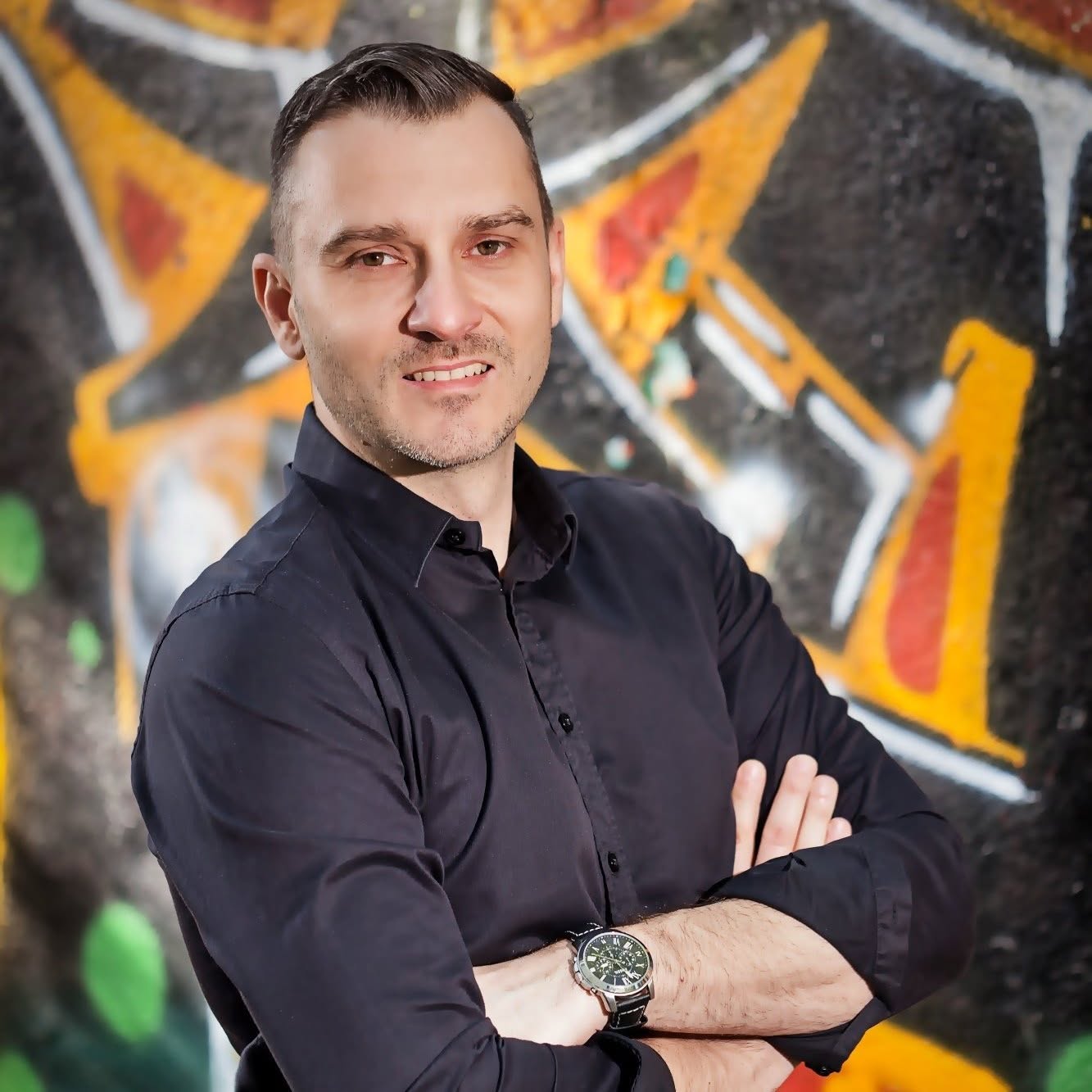
Michał is an Assistant Professor at the Institute of Computer Science of the Polish Academy of Sciences (IPI PAN). He graduated with honors (M.Sc.) from the Warsaw University of Technology and began his research career as a Visiting Researcher at George Mason University, where he worked in the group led by Professor Ryszard Michalski, one of the pioneers of Machine Learning. In 2008, he earned his Ph.D. at IPI PAN with a dissertation on feature selection for high-dimensional data, introducing the MCFS (Monte Carlo Feature Selection) algorithm. He has authored more than 30 scientific publications and developed several machine learning algorithms and R packages. His expertise spans machine learning and artificial intelligence, including classification, feature selection, clustering, NLP, LLMs, fraud detection, time-series analysis, parallel computing, big data, and recommendation systems. With more than 20 years of experience across both academia and industry, he has led and contributed to data science initiatives as both a Data Scientist and Principal Scientist for organizations including NuTech Solutions, Netezza, IBM, and iQor Polska. Since 2018, his work has focused primarily on large-scale recommendation systems. At BAMTech Media and Disney Streaming Services, he designed and implemented intelligent, adaptive recommendation and user segmentation algorithms for MLB, ESPN, HBO, and Disney+. He later led the development of a suite of recommendation algorithms at SiriusXM, one of North America's leading subscription-based audio entertainment companies. He recently joined Salesforce, where he focuses on next-generation recommendation systems and LLM-powered AI solutions.
Małgorzata Perycz, PhD

Małgorzata is an Assistant Professor in the Computational Biology Lab at the AI Department of ICS PAS. Her main research interests are epigenetic changes in disease and the molecular biology of glioma. She currently studies the effects of the REST transcription factor in glioma in the context of an IDH mutation, which influences the cell’s epigenetic landscape. She holds a PhD in neurobiology, awarded for her research on the role of local protein translation in the development of neuronal dendritic arbors. She received a Frontiers in Functional Genomics grant from the European Science Foundation for a scientific visit to the BRAIN Centre for Neuroscience in Trieste, Italy, and an EMBO Short-Term Fellowship for a visit to UIC in Chicago, Illinois. She completed her postdoctoral training at IBB, IIMCB and the Nencki Institute. She graduated from Intercollegiate Biotechnology in Gdańsk with an MSc focused on cellular signalling in cancer. During her studies, she completed a fellowship at the Beatson Laboratories for Cancer Research in Glasgow.
Marta Jardanowska-Kotuniak, PhD

Marta is a researcher in the Computational Biology Lab at the Institute of Computer Science, Polish Academy of Sciences (IPI PAN). In 2025 she obtained her PhD from the Institute of Biochemistry and Biophysics, Polish Academy of Sciences (IBB PAN), where her research focused on the role of transcription factors in cancer development using bioinformatics approaches. She holds a BSc and MSc in Molecular Biophysics from the Faculty of Physics, University of Warsaw. Her research experience includes work in both experimental and computational laboratories at the Institute of Physical Chemistry (IChF PAN) and the Institute of Biochemistry and Biophysics (IBB PAN). Her current research focuses on bioinformatics analyses, particularly on the identification and characterization of molecular biomarkers in cancer-related processes. She has twice served as a member of the organizing committee of the Polish Bioinformatics Society (PTBI) Symposium.
Aleksandra Bilska, MSc
Aleksandra is a biologist and bioinformatician currently pursuing a PhD in Medical Sciences at the Medical University of Łódź, where she investigates the role of DNA methylation in gene expression associated with gliomagenesis. Her research combines transcriptomics and epigenomics, particularly in the context of single-cell RNA-seq, DNA methylation, and integrative studies of gene regulation in brain tumours. She collaborates with research groups at the University of Warsaw, the Medical University of Warsaw, Wrocław Medical University, and the Nencki Institute of Experimental Biology PAS, where she is also an intern in the Laboratory of Sequencing. She is a lecturer in the OMICS Data Science course at ICM UW and is involved in interdisciplinary projects spanning neurobiology, immunology, oncology, and computational biology. She is also a member of the Polish Bioinformatics Society and the Polish Society of Neuro-Oncology.
Maciej Ołdak, MSc

Maciej Ołdak is a member of the Computational Biology Team at the Institute of Computer Science, Polish Academy of Sciences, and a PhD student at the Doctoral School of Molecular Medicine at the Medical University of Łódź. His research focuses on the role of transcription factors REST and KAISO in glioblastoma, integrating transcriptomics, epigenomics, and machine learning approaches. He obtained his BSc in Biotechnology and MSc in Medical Biotechnology from the University of Warsaw, where he studied the interaction between adipose-derived mesenchymal stem cells and regulatory T cells. He also completed postgraduate studies in OMICS Data Science at the University of Warsaw, specializing in multiscale biomedical data analysis. He has experience in both experimental and computational research, gained at institutions including the Nencki Institute, the National Institute of Geriatrics, Rheumatology and Rehabilitation, Polish Stem Cells Bank, and Instituto Superior Técnico. His interests include epigenetics, immunology, and the application of AI in biomedical research.
Former Members
Jacek Koronacki, Professor, PhD, D.Sc. (Hab.)

Jacek is a recognized authority on advanced statistical analysis and machine learning, and possesses more than 30 years of experience in these fields of research and development. His interests include bioinformatics, and quality control. He is the author or co-author of over 60 publications, including 6 books. His involvement in bioinformatics is focused on the analysis of high-dimensional (e.g., genomic and proteomic) data. In the early 2000s, he was involved as Head of statistical group in several projects to develop decision support (or the like) systems, e.g., for Bank of America, Ford Motor Co. and Air Force Academy at Dęblin, Poland. In addition to his involvement in R&D, he has taught extensively in Poland and elsewhere – in USA (Rice University and Ohio State University), Australia (The University of New South Wales) and Argentina (The National University of San Luis). He is a Fellow of the Institute of Mathematics and Its Applications (Great Britain). He is Senior Editor of International Journal of Data Mining, Modeling and Management and an Editorial Board member of Opuscula Mathematica and Mathematica Applicanda.
Henryk Jan Komorowski, Professor, PhD

Jan is a professor in the Department of Cell and Molecular Biology, Computational Biology and Bioinformatics at Uppsala University. His main areas of expertise are gene expression analysis, classification and prediction, gene and gene product interaction networks, modelling from high-throughput data and background knowledge, bibliome mining, rough sets, and data mining with Rosetta and PubGene.
Adam Filip, PhD

Adam completed his master’s thesis at the Faculty of Biology of the University of Warsaw and earned a PhD in neurobiology at the Free University of Berlin in Prof. Randolf Menzel’s group. He worked at the Mossakowski Medical Research Centre in Warsaw, the Nencki Institute of Experimental Biology in Warsaw and the Institute for Research in Biomedicine in Barcelona. He has studied computer science and studies mathematics, and he relishes strong coffee and biomedical data science. At ZBO, he analyses cancer data using bioinformatics and machine-learning tools.
Ilona Grabowicz, PhD

Ilona holds a PhD based on research into the impact of diets on microbiome composition and microbial gene expression (metatranscriptomics), as well as brain gene expression, at the Medical University of Warsaw. Earlier, she earned her engineering degree in Biotechnology at the Warsaw University of Life Sciences and an MSc in Plant Biotechnology at Wageningen University in the Netherlands. During her studies, she took part in internships in Wageningen, the Netherlands, and Bologna, Italy. She was a winner of several competitions, including “Thought for Food” in Zurich in 2011. After graduation, she worked in industry for two years. Currently, she is involved in two projects: publishing the results of her PhD and the multidisciplinary ZBO project “Atlas of brain regulatory regions and regulatory networks – a novel systems biology approach to the pathogenesis of selected neurological disorders”. She has both wet-lab and computational experience.
Magdalena Krupa (Mozolewska), PhD

Magdalena is an Assistant Professor in the IPI PAN. She obtained BS in Environmental Protection in 2009, BS in Biotechnology in 2012, MS in Chemistry in 2011 and PhD degree in Chemistry and Biochemistry, her specialty area being chemoinformatics. She participated in several international internships at Cornell University, Jackson State University, Nationwide Children Hospital and Ohio University in the USA and KIAS in Korea. She is a scientist with experience in wet and computer laboratory of chemistry, biochemistry, biotechnology and environmental protection. Author of multiple scientific papers in worldwide journals and author and co-author of over 30 invited, oral and poster international-conference presentations. Laureate of numerous stipends, grants and awards and several conference awards e.g. “The Zing Student Grant Award for the most outstanding student presenter” in 2014 and “Outstanding Young Researcher Award” at CBSB13. She was also a holder of scholarships from the Foundation for Polish Science in programs: “International PhD Projects” and “Master”. Her main focus of research is: investigation of proteins involved in iron sulfur cluster biogenesis, interactions between receptors, proteins and nanoparticles (e.g. carbon nanotubes), fullerenes and nanogold particles and interactions between proteins and DNA and as a PI on implementation of continuous and grained models of nanoparticles into UNRES force field.
Marcin Łapiński, MSc

Marcin is a member of the Computational Biology Lab at the Institute of Computer Science, Polish Academy of Sciences (ZBO IPI PAN), and a PhD student at the Doctoral School of Information and Biomedical Technologies of the Polish Academy of Sciences (TIB PAN). He earned his BS and MS degrees in Automation and Robotics from the Faculty of Electrical Engineering at Warsaw University of Technology. His main interests are convolutional neural networks and related machine-learning algorithms. Before starting his academic career, Marcin worked as a software engineer at companies such as Samsung and Opera.
Agata Dziedzic, MSc

Agata is a member of ZBO IPI PAN and a PhD student in the Postgraduate School of Molecular Medicine at Medical University of Warsaw. She earned her M.Sc. degree from the Faculty of Biology, University of Warsaw. During her graduate studies, she worked at the Institute of Biochemistry and Biophysics, Polish Acad. Sci. (IBB PAN), where she has become interested in bioinformatics in the field of evolutionary biology. She participated in international internships in Germany - in Göttingen and Berlin. She wrote her Master's Thesis under supervision of Anna Muszewska, PhD (IBB PAN) and Marta Wrzosek, PhD (UW). In ZBO she is involved in the multidisciplinary project “Atlas of brain regulatory regions and regulatory networks - a novel systems biology approach to pathogenesis of selected neurological disorders".
Mateusz Jakiel, MSc

Mateusz is an MSc student at the Medical University of Warsaw. For his thesis, he is using bioinformatic tools to find a correlation between myodegeneration and quorum sensing molecules in bacteria. At ZBO, he is involved in the “Atlas of brain regulatory regions and regulatory networks - a novel systems biology approach to pathogenesis of selected neurological disorders" project. He is looking forward to the possibilities of automation in medical areas such as diagnostics and personalized medicine. In his free time, he dabbles in home recording and cinema.